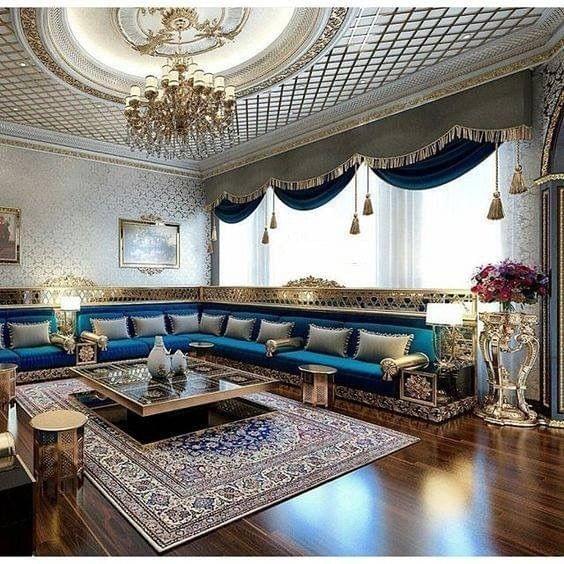
AbstractConfronted with traditional-looking Moroccan furniture in a house where Moroccan migrants or their descendants live, one may interpret this furniture as an ethnic symbol, underlining the Moroccan, North African or Arabic background of the owners. Analysing interviews and discussions on the Internet, this article shows that the furniture has many other significances as well. It not only functions as an ethnic symbol, but also signals affluence and fashionability, and it appeals in different, often emotional ways to the senses of those who experience the furniture by sitting on it while eating, drinking and talking. Apparently the traditional-looking Moroccan furniture has the capacity to transport people to other worlds. For those who spent their childhood in Morocco, these are often worlds that are part of their embodied memory, while for those who grew up outside Morocco, these are more often worlds that are primarily imagined and appropriated through aesthetic images in glossy magazines and coffee-table books. In both cases however, traditionallooking Moroccan furniture appear to respond to an emotional longing for the (re-)creation of experiences of conviviality. Especially in interviews with first-generation Moroccan migrants, this emotional longing resonates more strongly than the wish to make a statement about ethnic belonging. Introduction Looking at the interiors of migrants and their descendants, one is often struck by the material references to the dwellers’ countries of origin. These references can include small objects such as prints, wooden statues or musical instruments, but also whole sets of furniture either produced in the country of origin or in the country of residence (Metha and Belk, 1991; Joy et al., 1993; Miller, 1994; Ger and Østergaard, 1998; Roth, 1999; Kilickiran, 2003; Salih, 2003; Tolia-Kelly, 2004; Dibbits, 2005; Schwertl, 2008; Van der Horst, 2008). There are various ways in which the presence of these objects can be analysed. One may consider them primarily as ethnic symbols, as artefacts referring to the ethnic identity of the dwellers; this is how authors following Gans (1979) would most likely interpret them, according to his seminal article ‘Symbolic ethnicity: the future of ethnic groups and cultures in America’. In this article, Gans examined the way in which descendants of immigrants engage with the culture of their parents and grandparents. Gans’ argument is that sooner or later the descendants of immigrants will distance themselves from what he calls ‘the older ethnic culture’, and express their ethnic ties only through the celebration of particular festivals and feasts, or through the acquisition of certain consumer goods. These festivals, feasts and consumer goods thus function as ‘ethnic symbols’, which are, according to Gans, ‘visible and clear in meaning to large numbers of third generation ethnics, and they must be easily expressed and felt, without requiring undue interference in other aspects of life’ (Gans, 1979, p. 9). Instead of focusing on the symbolic meanings of artefacts, one can also look at their performative effects, their agency, their power and at the ways in which artefacts appeal to the sensorium. Questions about what artefacts do in different settings, how they matter, then become more important than questions about what they symbolize (see also Van der Horst, 2008): what is the effect of artefacts on people’s individual behaviour and on social-cultural relations, what is their effect on people’s emotions? In how far does the display in the domestic domain of artefacts affect both individual and social life? As Bahloul has argued in her study on a Jewish-Muslim household in Colonial Algeria, artefacts may provide a material anchor to the remembrance of rituals or habitual practices that strengthen ties within a community. Remembering domestic space, objects and associated practices that have been transferred into the register of memory by repetitive use and have become symbolic representations of someone’s habitus can be part of the rhetoric of nostalgia for a vanished community (Bahloul, 1996). In a study of Pakistani-British interiors, Tolia-Kelly has also pointed at the